
My PGP Fingerprint:
C1D1 889A 64DD 24F8 E1E8 E3A3 84DD FB00 7A82 F073

Hi everybody,
My name is Richard Kaiser. Born in Germany in 1964 I'm now based in Italy where I work as DevOps Consultant and ICT Operations Technician (and Manager). My family moved to Italy, where I graduated high school, in 1978. During high school I made first contacts with computing by means of an Mattel Aquarius home computer. As probably nobody remembers what it was: The Aquarius was a cheap entry level home computer with 4 KB of RAM but only 1.7 KB where available to the user (later expensively upgraded to 20 KB), a TV output and (optional) music cassette drive for data storage. As minimalistic as it may sound by today's standards, it was on that little guy with a 3,5MHz CPU that I learned programming and even prototyped my first business application!
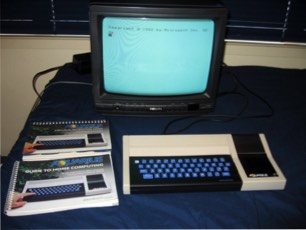
The Infamous Aquarius by Mattel
My first jobs gave me the opportunity to work with CPM machines and with a monstrous Data General Nova computer that had hard drives the size of a pizza.
If you want to see what they looked like click here (external link opens in new Tab)
This monster was running a home made hardware wholesale system written in Fortran (!) and my job was to transfer data from this wardrobe sized dinosaur to a PC. As no utilities where available for the Nova (beside the Fortran compiler) I had to write my own interface for the only RS232 port available on this machine. As I was noob and the very same port was used by the terminal (which luckily had 2 RS232s) the solution wasn't exactly elegant or super fast but hey… it worked!
I am still grateful today to the people from Columbia University for developing Kermit for the PC side!
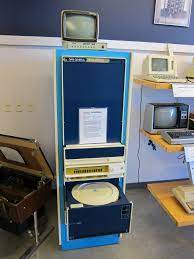
A Data Genera "Nova" mini computer
As time went by, and my job as technical consultant for the court of Florence left me some spare time, I started prototyping my first business application on my little Aquarius. This prototype was painfully slow and limited due to the, basically non existant, resources and all data was sequentially read and written to on a music-cassette drive! (Funny part: the crippled MS-Basic that came with the computer had no "FOR - NEXT" instruction and instead of buying the expensive and hard to find cartridge with the "full" Basic I opted for an, even more expensive, RAM upgrade to 20KB!)
Nevertheless, with the help of this, basically unusable, prototype I convinced a new-born footwear agency to invest in a PC on which I then developed a usable system for tracking orders and production. The first version was mono-user and completely written in Basic.After migrating to the 80286 platform I enrolled in the Microsoft Developers program where I got a preview of Windows for Workgroups during a DevCon in New York. As it looked promising I ported the original Basic program to Windows using VisualBasic and C++ basically creating myself a toolkit very similar to what Ashton Tates dBase had to offer later. As the company grew it was time to port the system again making it multi user in dBase and Clipper, later on in FoxPro where SQL became available and simplified a lot of the queries that had become complex to handle otherwise. This was the time when the world changed for me…
1993: My world changes
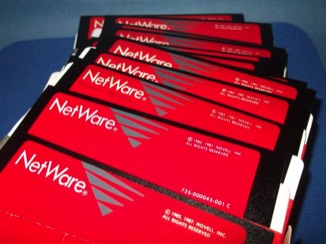
The multi-user version of my software introduced the necessity of a network because: What good does you do a multi-user version if multiple users can't use multiple PCs ? So it was time to create my first LAN. As restrictions applied as to where and how many cables could be run from my 3 servers to the 12 workstations I adopted the 10Base2 (also called Thin Ethernet or RG58 Bus) structure and Window for Workgroups soon changed to Novell Network.
Now on to communication with the rest of the world …
Internet wasn't a thing back in 80s so the question arose: How can I satisfy the request to have a computer also in the warehouse at the other end of the city so inventory could be kept updated? A multiplexed cable connection was then used to connect with the warehouse, those eliminating a lot of phone calls and faxes just with requests to update the database in the main office.
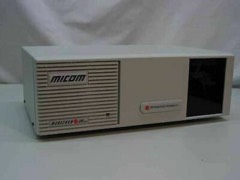
A Micom multiplexer
As business grew the same problem arose with the agency's main customer in the U.S..: He complained that he had now to hire people just for data-entry from faxes. The solution was a dial-up connection sending back and forth orders, production updates and schedules, invoices and much more. A short time later a BBS was born in our office that became quickly critical for both the business and a lot of Junior IT junkies like me.Then, as Novell aged we got Windows NT, the first real network enabled operating system from Microsoft. So I switched again and got rid of the 8083 Novell server repurposing to "Primary Domain Controller" complete with roaming profiles. My users where happy again.
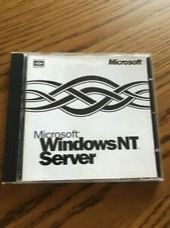
End of 1999: The change from programming sysadmin to network IT Manager
In 1999 I was put in charge to design and install the Lan infrastructure for a new industrial building. System requirements where quite high for these times and I had to choose carefully.
It was agreed to realize full IEE-802.3ab-1999 (1000BaseT) compatibility! As I didn't know a lot of this new standard I booked a 2 months full immersion course with a famous Italian supplier of network cabling and connectors. Here I learned the specifications for all networking standards and installation requirements but also everything about cables and connectors and how to make both copper and fibre connections.
As knowledge earnes you confidence I went to the drawing board and designed "my" network infrastructure complete with drawings for all network and power cabling.
The outcome was an underfloor infrastructure for the offices with data, phone and UPS backed power hookups every 2 meters, fibre backbones to the server room both from the offices and the industrial buildings with fully connected switches working in spanning tree.
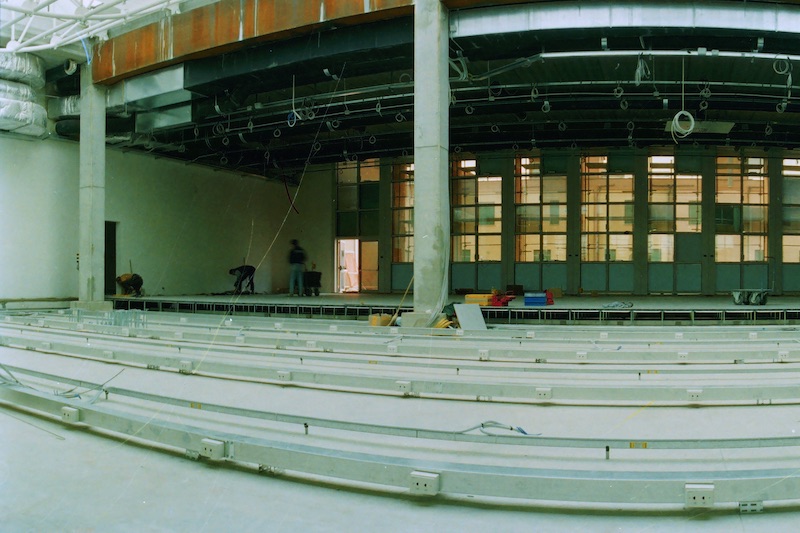
The open space cabling with the rised floor being installed
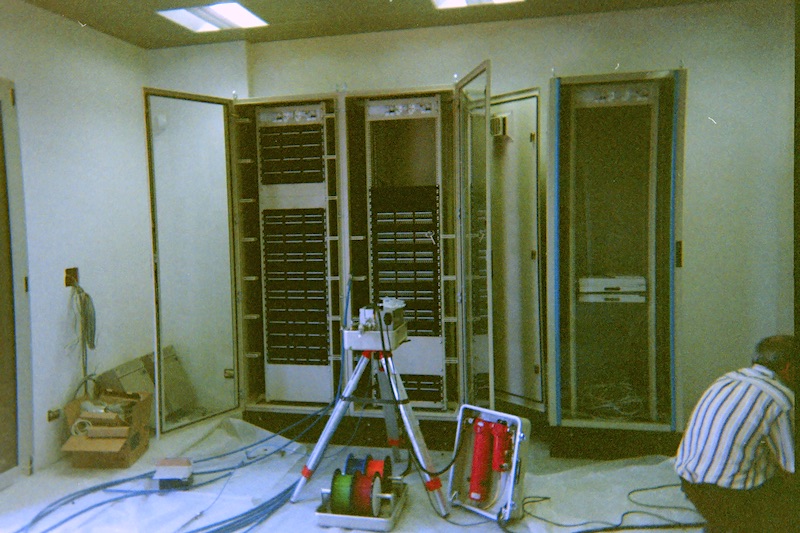
Blowing fibre to the patch panels in the server room
During the following year I supervised construction of the buildings, made smaller changes (mostly dimensional caused by on-the-fly changes from the architect) to my drawings, fought with the construction guys about curving radiuses for the conduits and sourced a qualified company for running and connecting the cabling. By the end of year 2000 everything was ready, passed all Fluke Tests and, a welcome bonus, the italian magazine "Networking Italia" published an article about the project.
As of today the infrastructure is handling Gigabit networking without hickups, only the analog phone connections have been dismissed in favour of Voice over IP.
It was finally so easy to find information. I had been able to order manuals from Amazon since 1995 instead of trying to get them from bookstores using their ISBN codes (which wasn't always easy because the best books came from the US), but discussing them in forums on Usenet quickly became irreplaceable.
Remote connections became cheap and reliable so I started to interconnect factories from Sri-Lanka, Egypt, Moldova, Italy, Poland and over 40 international stores with the main system optimising workflows and communications.
And so we come to a new chapter...
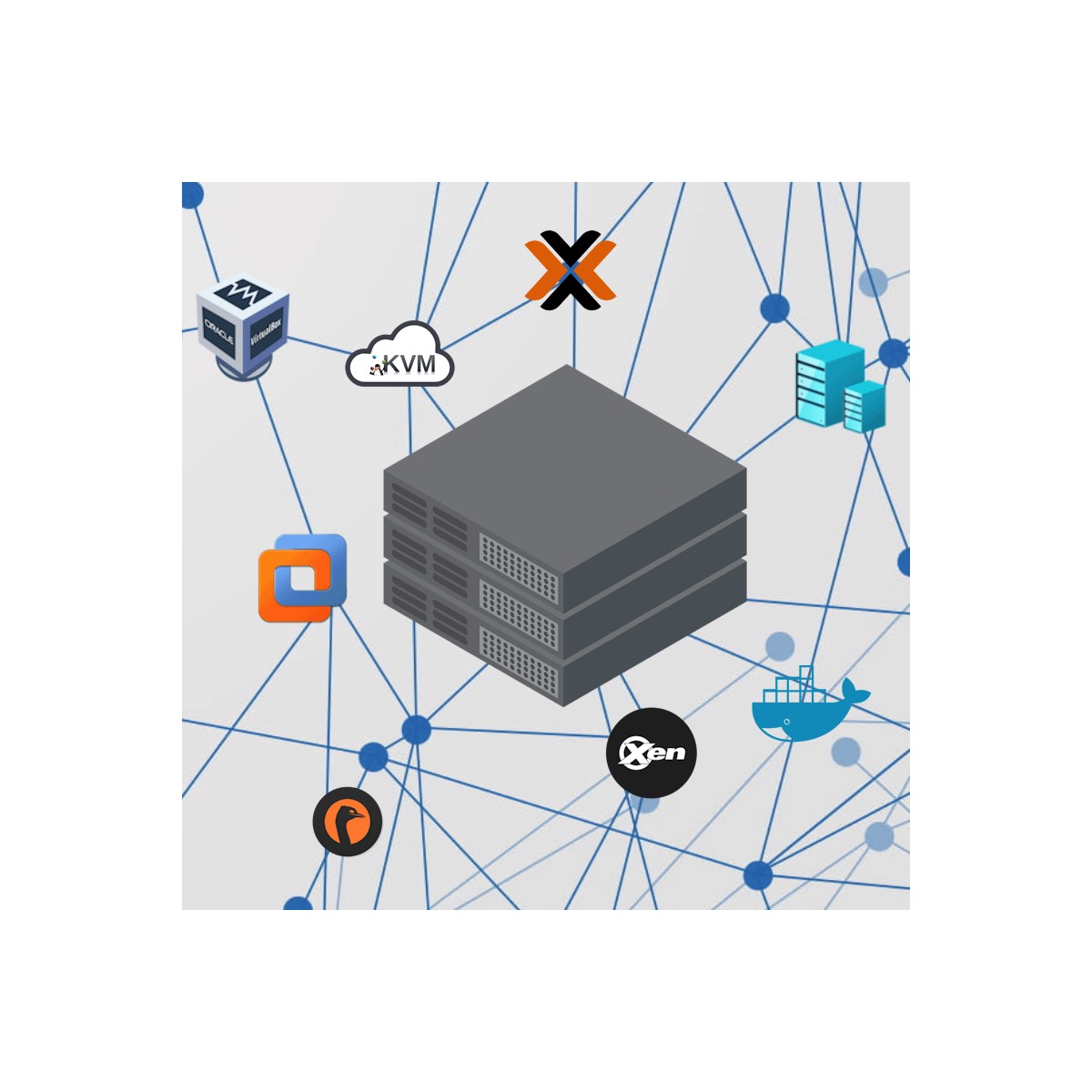
Virtualization: A new world
So I got into Virtualization. A new world where unused hardware resources due to overestimating system requirements and downtime for upgrading server machines because requirements grew faster than envisioned basically disappeared.
VMware, Proxmox, Hyper-V or Xen: I used them all with varying degrees of satisfaction and disgruntlement (Microsoft you hear me!), some crazy nested virtualization setup came into play, thin clients were deployed and IT costs shrunk to the minimum.
Windows file servers were repurposed for FreeNAS (today TrueNAS) servers with an immediate decrease in maintenance cost and increase of availability.
Today the experience I gathered in 40 years of IT operations pays off and is invaluable for network projects and customer server configuration.
The main goal in all my projects was, is and will be resource optimisation, lowest possible maintenance requirements with highest possible availability